
Last updated November 21, 2026
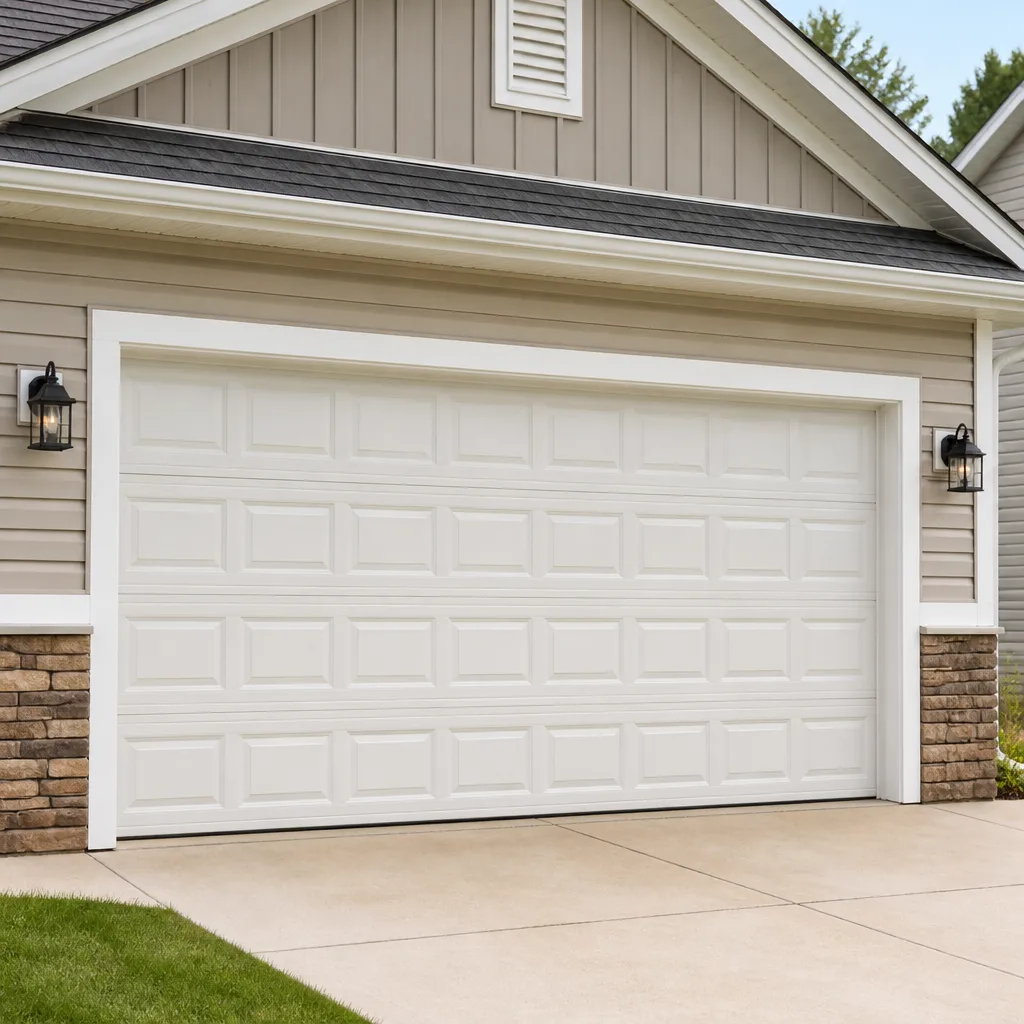 Raised-panel steel
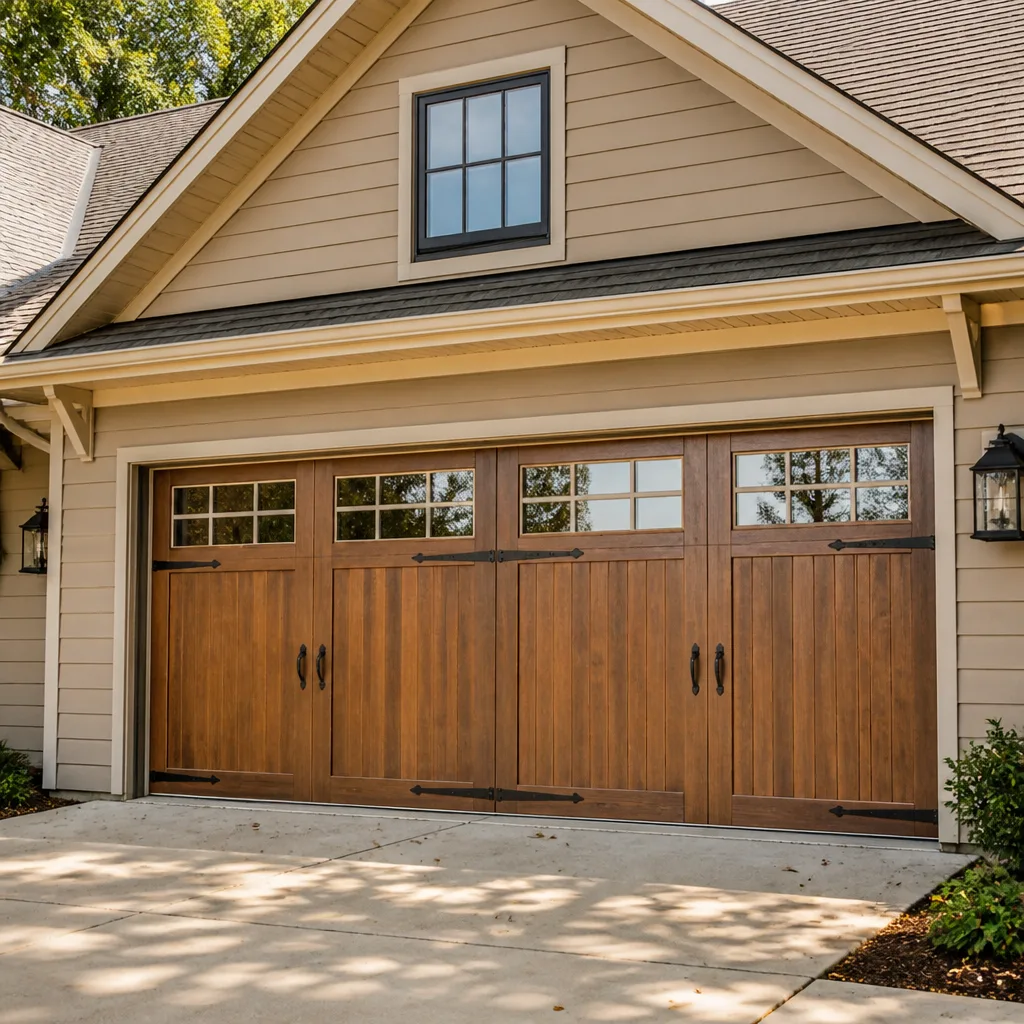 Carriage house
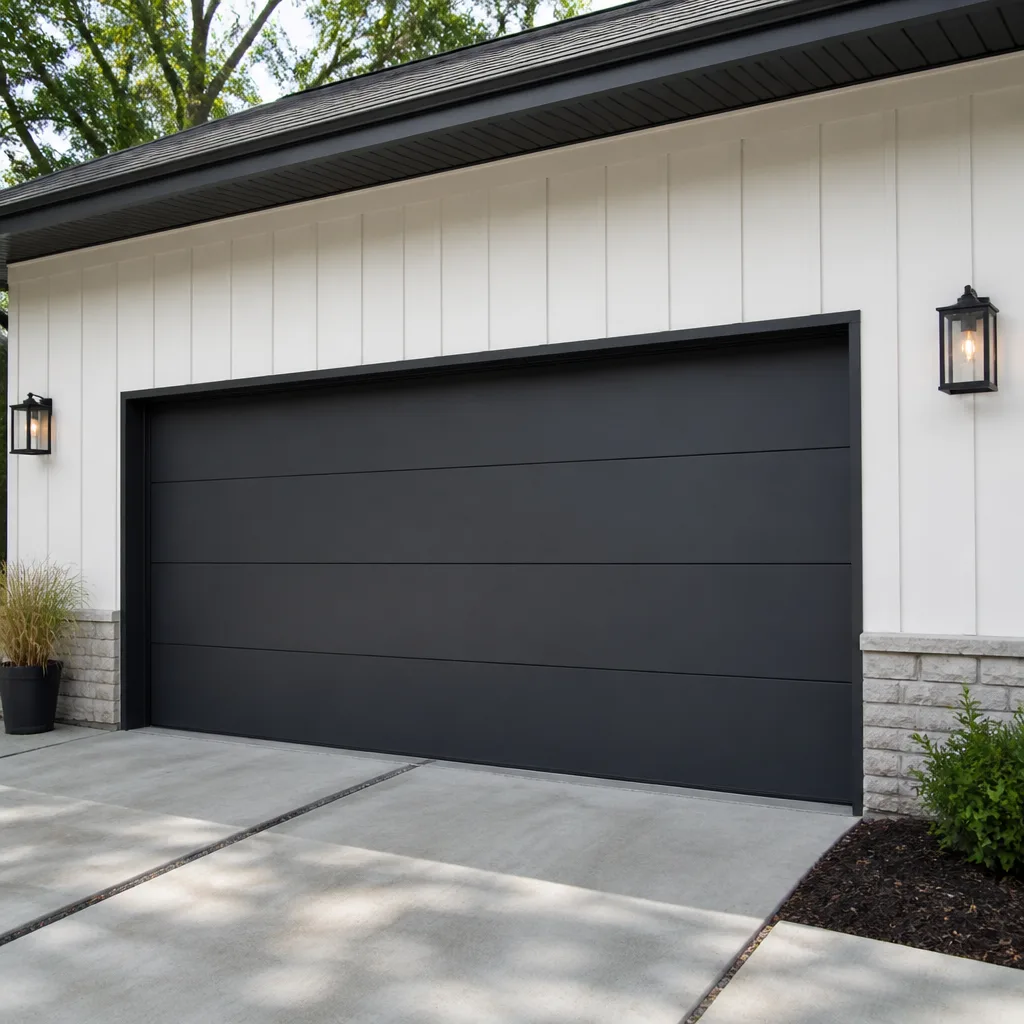 Modern flush
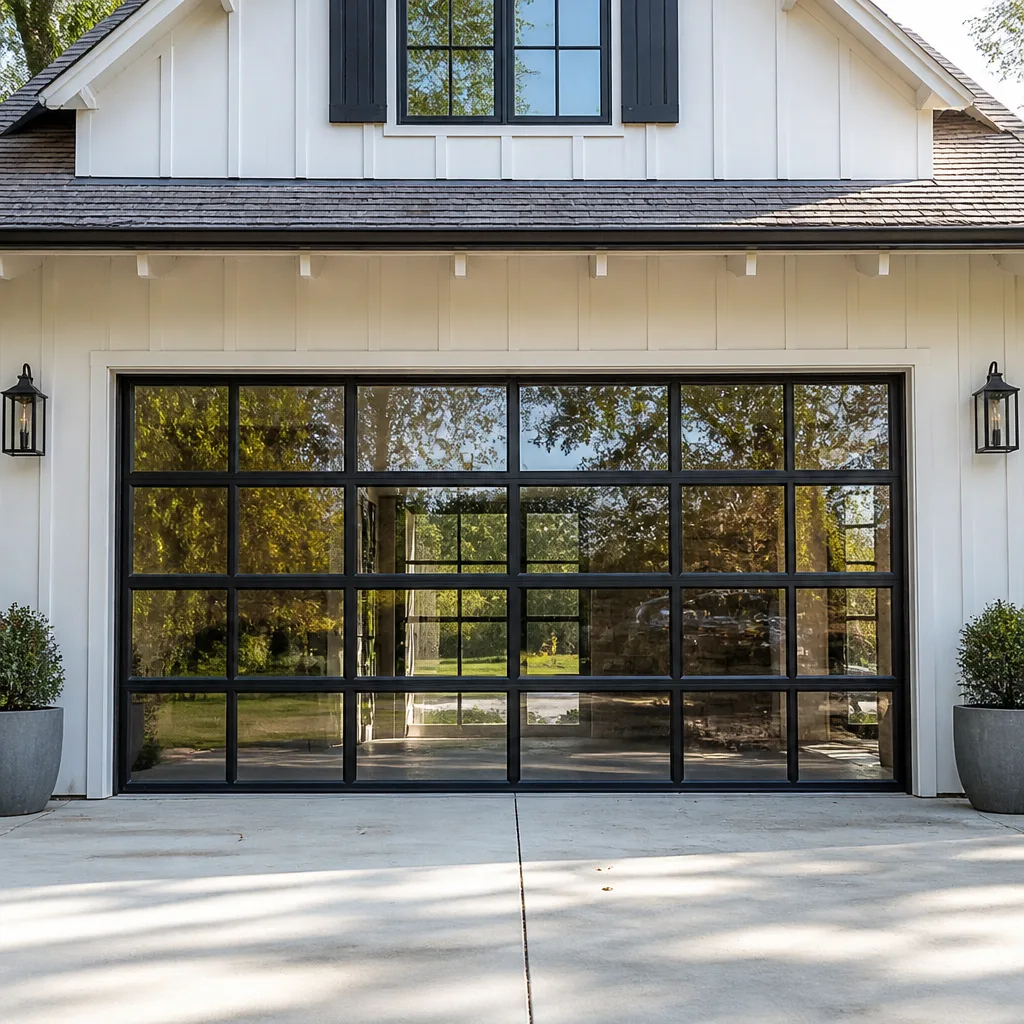 Full-view glass
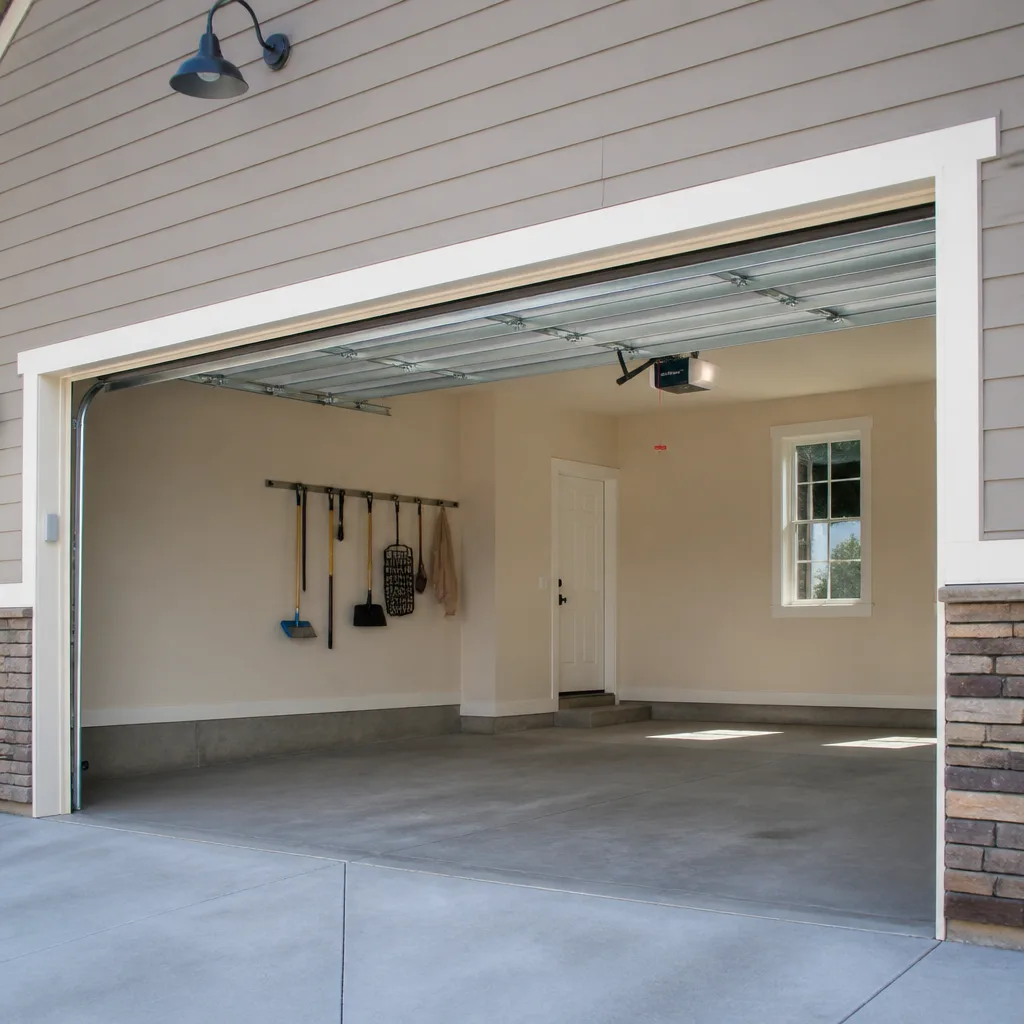 LiftMaster openers
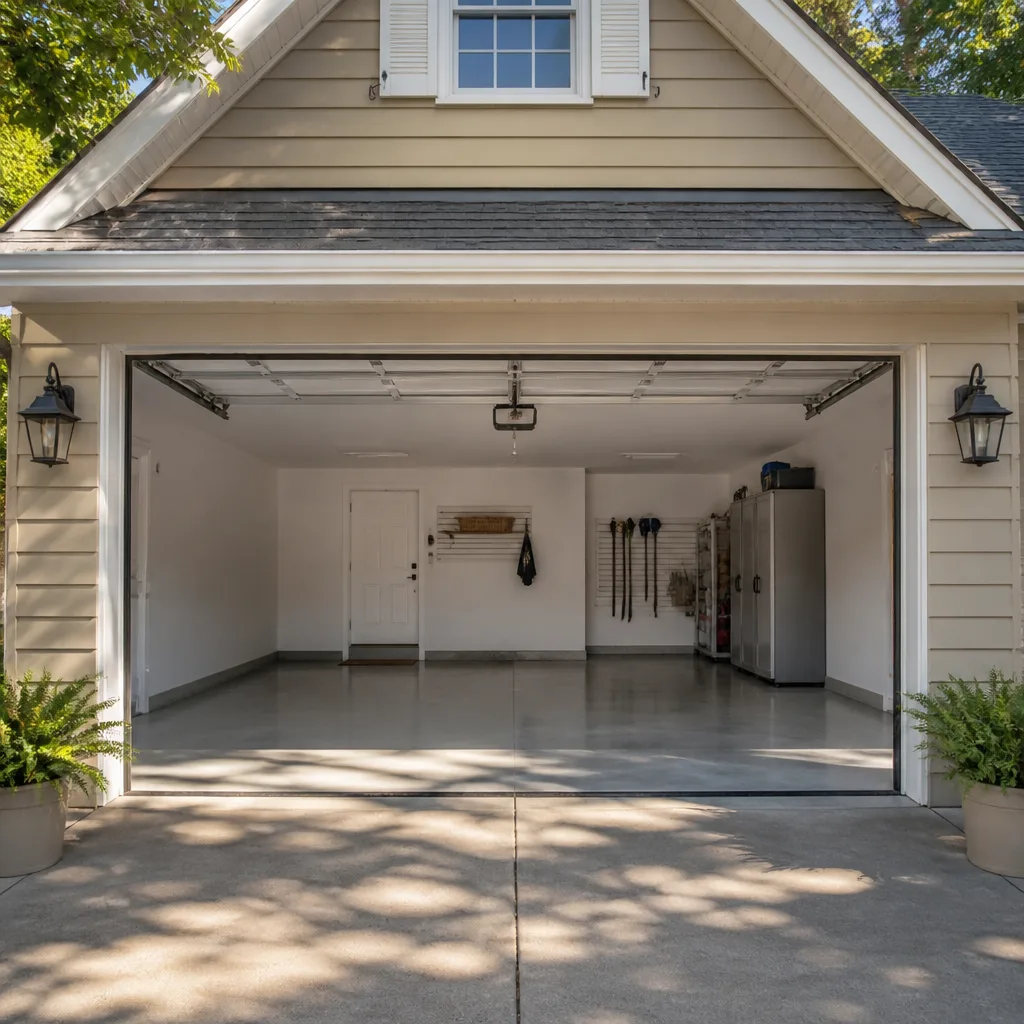 Chamberlain openers
Full 25-point door and opener safety check with every visit - springs, cables, rollers, tracks, and your LiftMaster or Chamberlain opener included
You get a price before we start. It does not change when the pro arrives.
Get your free estimateGarage Door Emergency Preparedness Guide for Park Hill Homes
Most garage door emergencies aren’t really about the door. They’re about the moment you realize you don’t know how your own system works. The car is trapped, the power is out, the spring just snapped with a sound like a gunshot, and suddenly you’re standing in the dark trying to figure out which cord does what. The counterintuitive part: the door itself usually isn’t the problem. The problem is that nobody in the house has ever practiced the four-minute routine that turns a crisis into an inconvenience. This guide walks through how your system actually works, how to release it by hand on a Genie, Clopay, Amarr or Wayne Dalton unit, how to move a door safely when a spring is gone, and the fifteen-minute preparation that means anyone in your household can get the garage open without you. Park Hill homes deal with a specific set of pressures, and we’ll get to those.
Quick Answer
A garage door emergency is manageable if you prepare before it happens: know where the manual release cord is, test it once now, label it clearly, keep a working flashlight and a step stool near the door, and understand that you never force a door with a broken spring. If the door is stuck mid-travel with a car inside, stop the opener, disconnect it from the door, and move the door by hand with care. Most emergencies resolve in minutes once someone in the house knows the sequence. The rest of this guide builds that knowledge piece by piece.
Styles & brands we work with
- Raised-panel steel
- Carriage house
- Modern flush
- Full-view glass
- LiftMaster openers
- Chamberlain openers
Table of Contents
- How Your Garage Door System Actually Works
- The Manual Release Cord: What It Does and the One Mistake That Jams the Door
- Operating a Door Safely When a Spring Is Broken
- When a Door Is Stuck Mid-Travel With a Car Inside
- The 15-Minute Physical Prep Checklist
- Park Hill Scenarios: Snowstorm Outages, Hail, and Summer Heat Bind
- What to Do During a Power Outage
- Common Mistakes to Avoid
- When to Call a Professional
How Your Garage Door System Actually Works
There are four components, and each fails in its own way. Understanding which one you’re dealing with is the difference between a quick fix and a broken door panel.
The opener. A motor mounted to the ceiling pulls the door up and pushes it down along a rail. On a modern LiftMaster, Chamberlain or Genie, the opener also handles Wi-Fi, safety sensors and auto-reverse. When people say “the opener is broken,” they often mean the door won’t move, but the opener is fine and something else is wrong. We work on the brand you already own, which matters because each manufacturer has its own logic board, sensor setup and remote pairing method.
The springs. These are the counterbalance. They hold most of the door’s weight, so the opener only has to lift a small fraction of it. A torsion spring sits on a shaft above the door; extension springs run along the sides. When a spring breaks, the door becomes very heavy very fast, and the opener will often try to lift a door it can no longer handle.
The door and hardware. Panels, hinges, rollers and tracks. Steel doors like most Clopay and Amarr models handle Denver-area weather well until hail or a warp takes a panel out of alignment.
The safety system. Photo-eye sensors near the floor and, on many models, a pressure sensor in the opener. These stop the door if something is in the way. They’re the reason a door sometimes reverses for no obvious reason.
In our experience, most “emergencies” are a spring failure or a sensor misalignment, not a dead motor. Knowing which is which lets you decide whether to release the door by hand or call for garage door repair.
The Manual Release Cord: What It Does and the One Mistake That Jams the Door
Every opener from every major brand has a manual release. It’s a cord, usually red, hanging from the trolley that rides on the rail. Pulling it disconnects the opener from the door so you can lift the door by hand. That’s the whole function. And it’s the single most important thing to know in a garage door emergency.
The mistake almost everyone makes: pulling the release while the door is not fully closed. If the door is partially open when you pull that cord, the door is no longer held by the opener, and it will drop or slam because it’s supported only by the springs. That can bend panels, damage the track, and – if someone is underneath – cause injury. On a Wayne Dalton or a Clopay door with a heavy insulated panel, the drop is significant.
Here’s the sequence, and it matters:
- Close the door fully first if the opener will let you. If the power is out, do not try to move the door yet – see the next section.
- Pull the release cord down and toward the door in a firm motion. On most Genie and LiftMaster trolleys, it clicks free.
- Test the door by hand. Lift it a few inches. If it feels extremely heavy or won’t stay put, a spring is likely broken; do not continue.
- Reconnect by pulling the cord again (or, on some models, by running the opener until the trolley re-engages). Run the door up and down once to confirm it reconnected.
Picture the cord: red handle, hanging about six feet off the floor, midway between the door and the opener. In text: it hangs from the trolley block on the rail, not from the door itself. If you can’t find it, look for the trolley – the piece that slides along the rail above the door. One pull, one click, done.
Once you’ve found it, label it. A strip of tape with “PULL TO RELEASE” in sharp marker is enough. The person who needs it in an emergency may not be the person who labeled it.
Operating a Door Safely When a Spring Is Broken
You can open a door with a broken spring by hand, but technique matters. The door is now carrying its full weight, often two hundred pounds or more depending on the model and insulation, and a door that gets away from you can come down hard.
Before anything: never try to repair, adjust, wind or unwind a torsion or extension spring yourself. These springs are under extreme tension. They cause serious injuries when someone without training tries to work on them. This is the one part of the system that always belongs to a trained technician. Our spring repair is handled in-house because the work is hazardous and brand-specific.
If you need to get a car out with a broken spring:
- Disconnect the opener first by pulling the release cord (door fully closed, if it isn’t already).
- Get help. Two people on a heavy door is safer than one. If the car needs to come out, have someone guide from outside.
- Lift from the bottom center with both hands, knees bent, and raise the door smoothly. Lift steadily – not in jerks.
- Once the door is fully up, prop it with a sturdy object on each side or, better, have someone hold it while you move the car. Do not walk away from an open door with a broken spring; it will drift back down.
- Lower it slowly once the car is clear, guiding it down with both hands.
Do not run the opener while the spring is broken. It will strain the motor and, on some units, damage the rail. Call for spring repair before anyone uses the door again.
When a Door Is Stuck Mid-Travel With a Car Inside
This is the scenario that causes the most damage, and the fix is about sequence. A door stopped partway up with a car half inside is not a door problem, strictly speaking – it’s a loading problem. Here’s what to do:
- Press the wall button once to see if the opener will finish its cycle. Do not press it repeatedly.
- If the door won’t move, pull the release cord and let the door settle onto its springs. If the door was mid-travel, it may drop – keep everyone clear of the opening and do not stand under the door.
- Move the car out carefully once the door is stable. If the door has settled partway up, you may be able to slide the car out without lifting the door at all.
- Do not force the door up by hand if it resists. A panel that’s come off a roller, or a track that’s bent, will fight you – and pushing harder bends the panel or pops the roller out of the track.
- Disconnect the opener so it doesn’t try to close on a car later, and call for help.
The urge is to force the door because the car is stuck. Don’t. We’ve seen doors with a roller popped out of a Wayne Dalton track that cost far more to fix than the original problem would have. A stuck door can usually wait for a technician; a bent one can’t. If the panel is warped or the track is bent, this becomes a garage door installation conversation once the repair cost adds up, and we’ll tell you honestly which way to go.
The 15-Minute Physical Prep Checklist
This is the part that actually converts an emergency into an annoyance. Do it once, on a clear day, and your household is prepared for the next outage or spring failure – even if you aren’t home.
Test each item yourself, then show one other adult in the house:
- Find the manual release cord on your opener. Confirm which brand you have – Genie, LiftMaster, Chamberlain and others hang it in slightly different spots.
- Label it. Tape with “PULL TO RELEASE” in sharp marker, hung at eye level.
- Test the release with the door fully closed, then reconnect. Make sure the trolley re-engages smoothly.
- Confirm the safety sensors – the small lights by the floor – are aligned and lit.
- Keep a step stool and a working flashlight mounted on the wall near the door.
- Write down the brand of your door and opener (Clopay, Amarr, Wayne Dalton, LiftMaster, etc.) and tape it to the opener housing. It saves time when you call.
- Check the wall button location in the dark – is it reachable in a blackout?
- Show the sequence to one other adult in the house: close door, pull cord, lift by hand, reconnect.
That’s fifteen minutes, maybe twenty with the walkthrough. It’s the difference between a crisis and a procedure.
Park Hill Scenarios: Snowstorm Outages, Hail, and Summer Heat Bind
Park Hill sits on the eastern edge of the city where the older housing stock meets late-afternoon thunderstorms rolling off the plains. Three local conditions drive most of the garage door emergencies we see in Park Hill:
Winter power outages. Snow and ice storms knock out power with some regularity along the Front Range. When the power goes, the opener is dead and the door is locked to the trolley until you pull the release. If your car is inside and the power could be out for hours, know the manual release before the storm, not during it. A charged flashlight and a labeled cord handle this cleanly.
Hail that warps panels mid-storm. Hail season in Park Hill is intense, and a dented panel on a steel door – most Clopay and Amarr models – can bind against adjacent panels or knock rollers out of alignment. You may not see the damage until the next morning when the door won’t travel. If you notice the door sounding or moving differently after a storm, stop using it and get it checked before a panel catches a roller.
Summer afternoon thunderstorm heat bind. Metal doors and tracks expand in summer heat. A door that runs smoothly in the morning can drag and reverse in the late afternoon because the track has warmed and the spring has lost some tension. This is common in Park Hill’s hotter afternoons, and it usually presents as the door reversing for no reason. It isn’t an emergency, but it’s a sign the springs or rollers need attention. A fast call for garage door opener repair sorts it out before the door fails at an inconvenient hour.
These are the three patterns we see most in Park Hill. Once you recognize them, you can prepare for the season you’re in.
What to Do During a Power Outage
The door doesn’t come with its own battery. It runs on house current, and when the power goes, the opener stops where it is. Here’s the sequence for getting the car out safely.
First, check whether the opener has a battery backup – some LiftMaster and Chamberlain units do. If it does, the door may still cycle. If not, the door is dead to the opener and you’ll need to use the manual release.
If the door is fully closed when the power goes, you’re in the best position. Pull the release cord, lift the door by hand from the bottom center, and take the car out. Prop the door open, or hold it, and lower it slowly when the car is clear. Do not reconnect the release until the power comes back and you’ve confirmed the door runs normally.
If the door was partway up when the power went, that’s the riskier case. Keep clear of the opening. If the door is stable (springs holding), leave it and move a car out through the driveway side if you can. Otherwise, get help, pull the release, and let the door settle with someone on each side. Never let a partially open door drop on a person or a car.
When power returns, reset the opener by running it up and down once. If it doesn’t reconnect, call. We answer 24/7.
Common Mistakes to Avoid
- Pulling the release with the door partway up. The door will drop because the springs are the only thing holding it. Close it first, then release.
- Running the opener with a broken spring. The motor is built to lift a small fraction of the door’s weight; without the spring, it strains and can fail. Turn it off and call.
- Trying to repair a spring yourself. Torsion and extension springs are under extreme tension. This is the single most dangerous part of the system and belongs to a trained technician.
- Forcing a stuck door by hand. A popped roller or a bent track turns a small repair into a larger one. Stop and call.
- Blocking the safety sensors. A box, a snow drift or a fallen leaf in front of the photo-eyes will make the door reverse. Clear the sensors before assuming the opener has failed.
- Ignoring a door that “sounds a little different.” Rattling, dragging or reversing after hail or a heat wave is usually a sign of a loose roller or a spring under tension. Catch it early.
- Assuming someone in the house knows the routine. If only one person has ever pulled the release, the household isn’t prepared. Show another adult this afternoon.
When to Call a Professional
Some jobs need a technician, full stop. A broken spring, a door that won’t travel with the opener disconnected, a track that’s bent or a panel that’s come off a roller – these are not jobs for a homeowner with a screwdriver. If the door dropped, if it’s misaligned and dragging, or if a storm has knocked a panel out of alignment, call. Same for a smart opener that won’t reconnect, a remote that stopped pairing, or an opener that’s dead to the wall button but the sensors are clear.
Garage Door Repair Park Hill offers free estimates in Park Hill – call (888) 912-7130. We answer 24/7. Fast dispatch from 7am to 7pm, Sunday through Friday. We work on LiftMaster, Chamberlain, Genie, Clopay, Amarr, Wayne Dalton, Craftsman and Raynor equipment, springs and openers and panels under one roof, so you’re rarely told “we have to order that.” Our technicians have up to 9 years of experience, and the price is set by a written estimate before any work starts.
See the difference
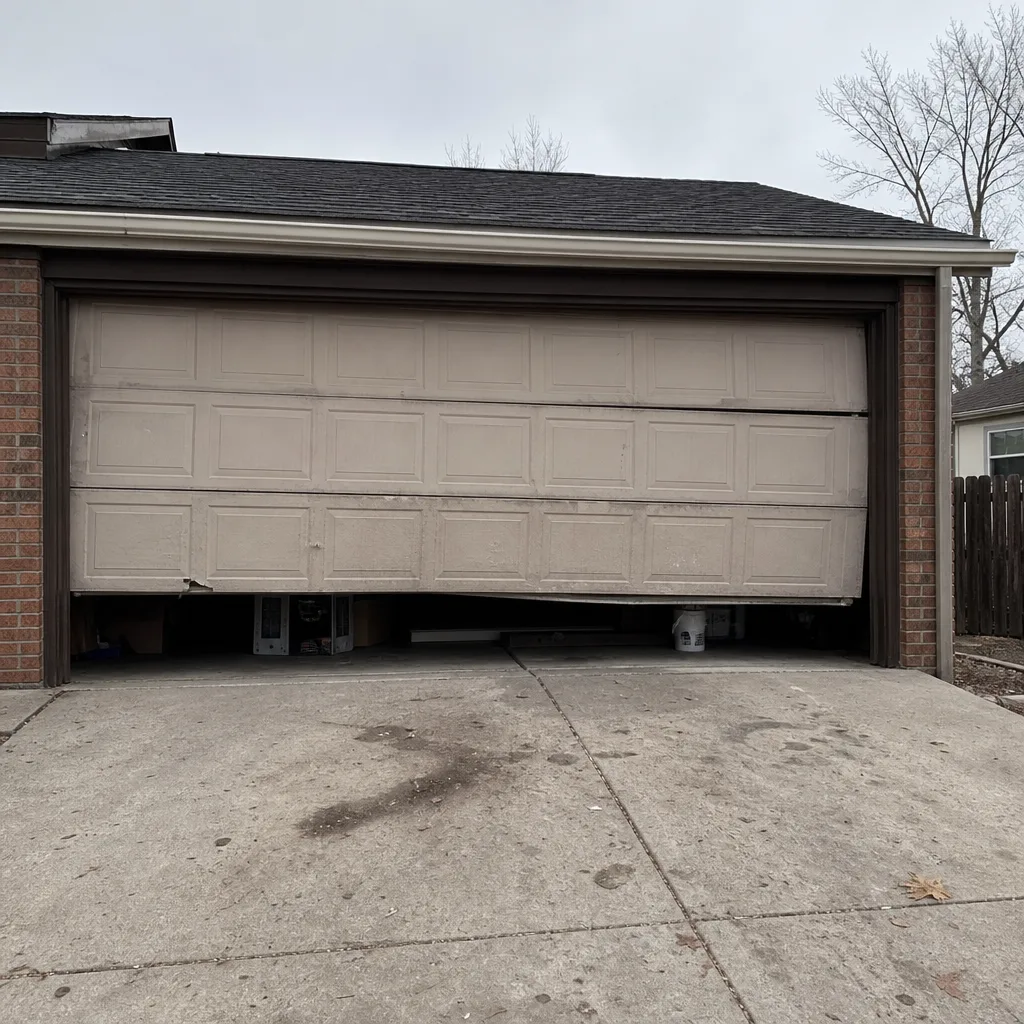 Before
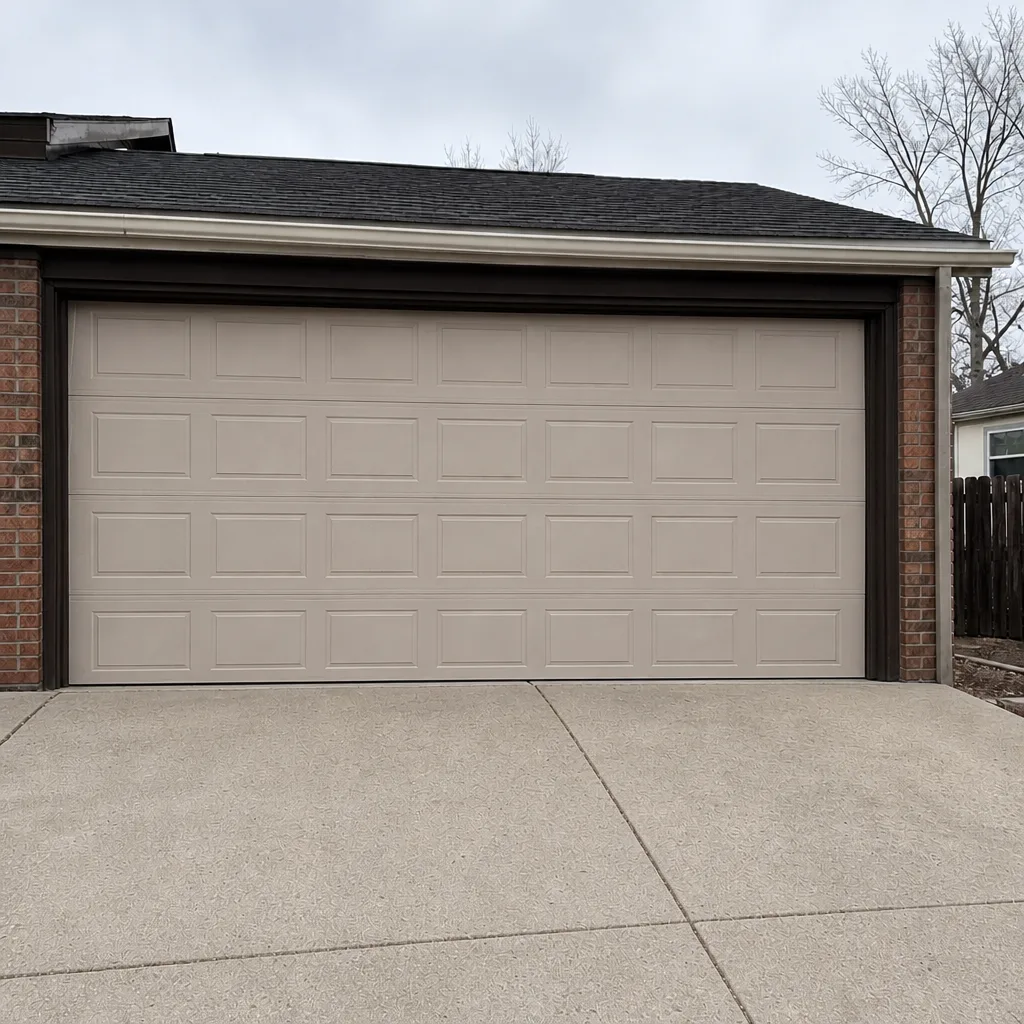 After
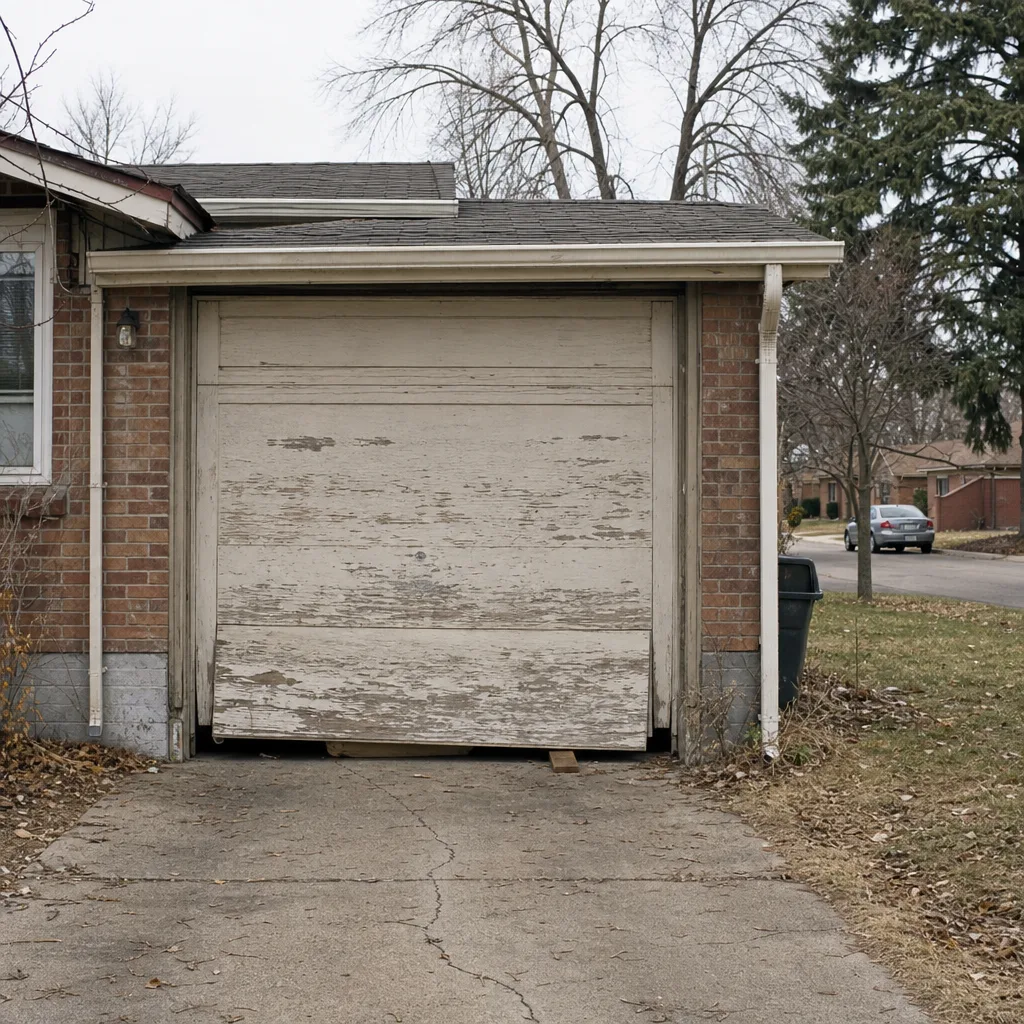 Before
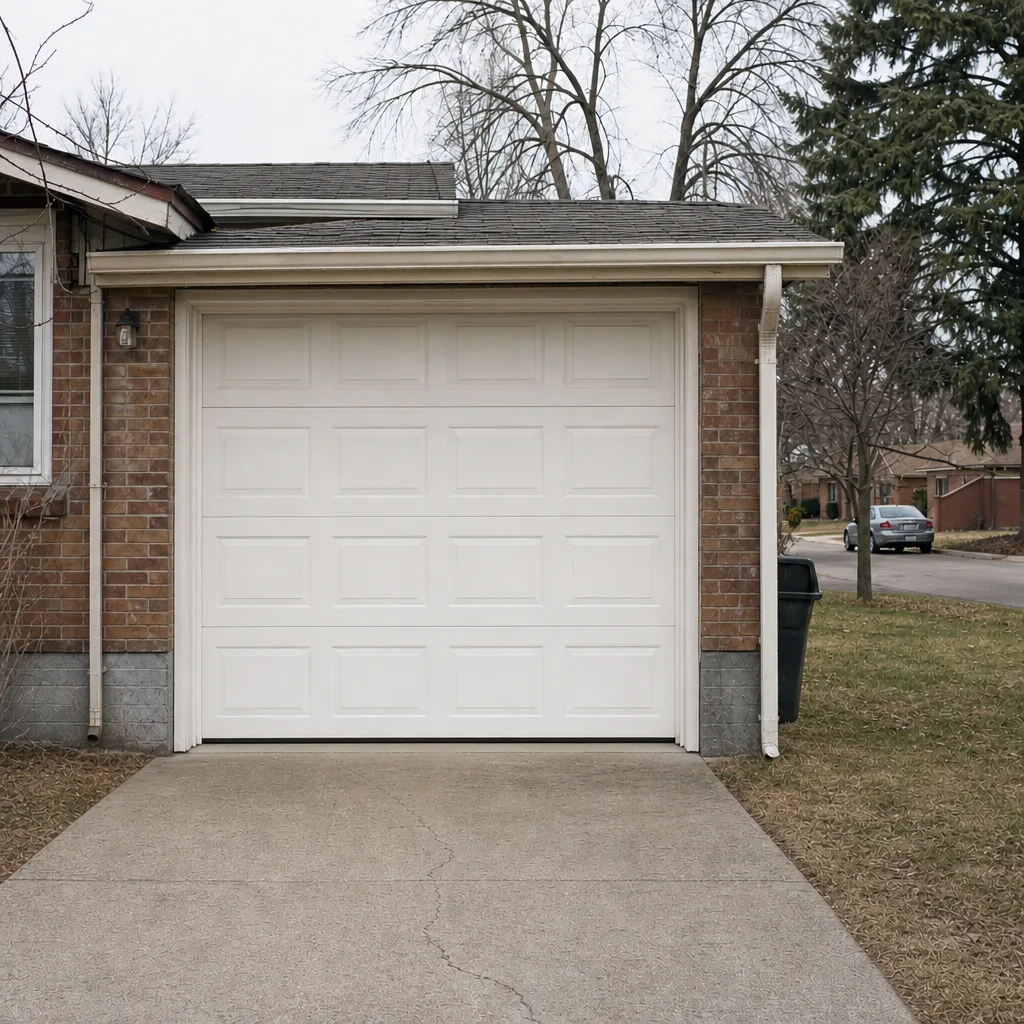 After
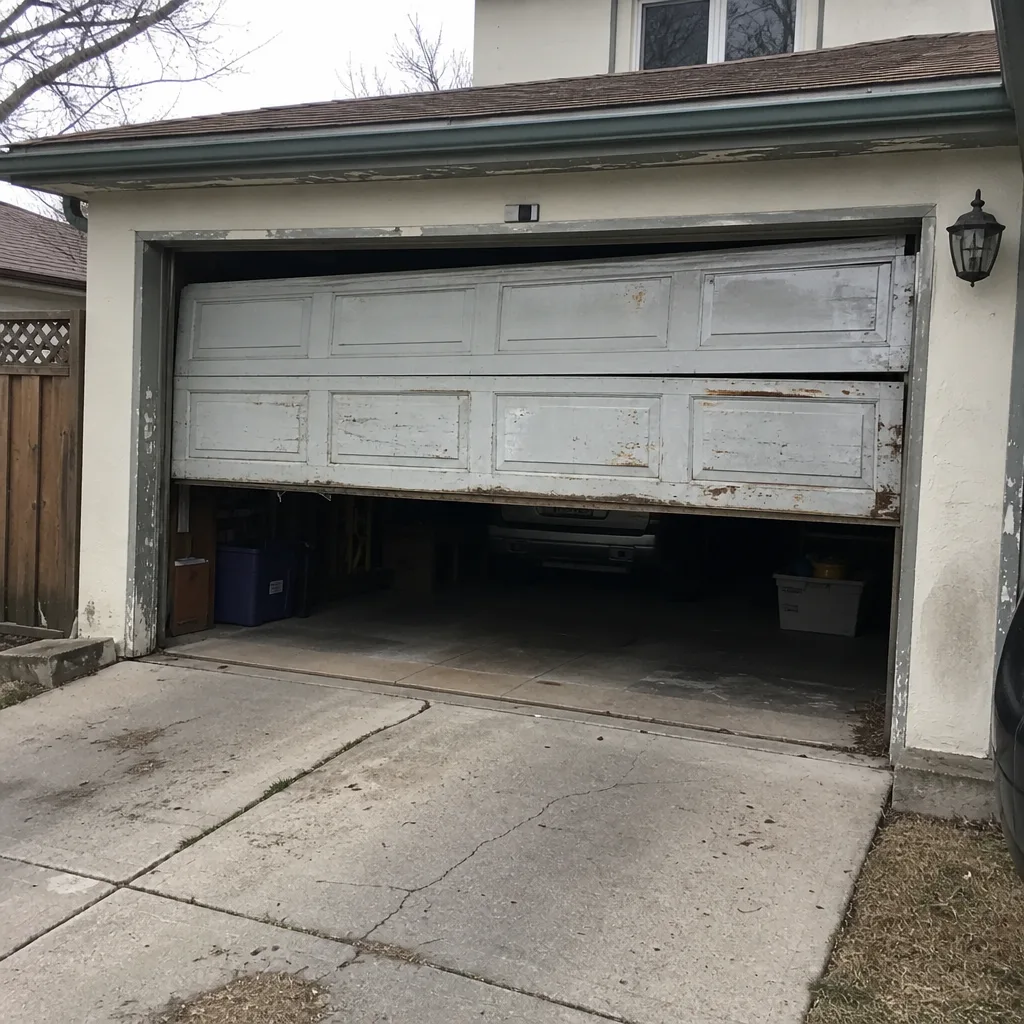 Before
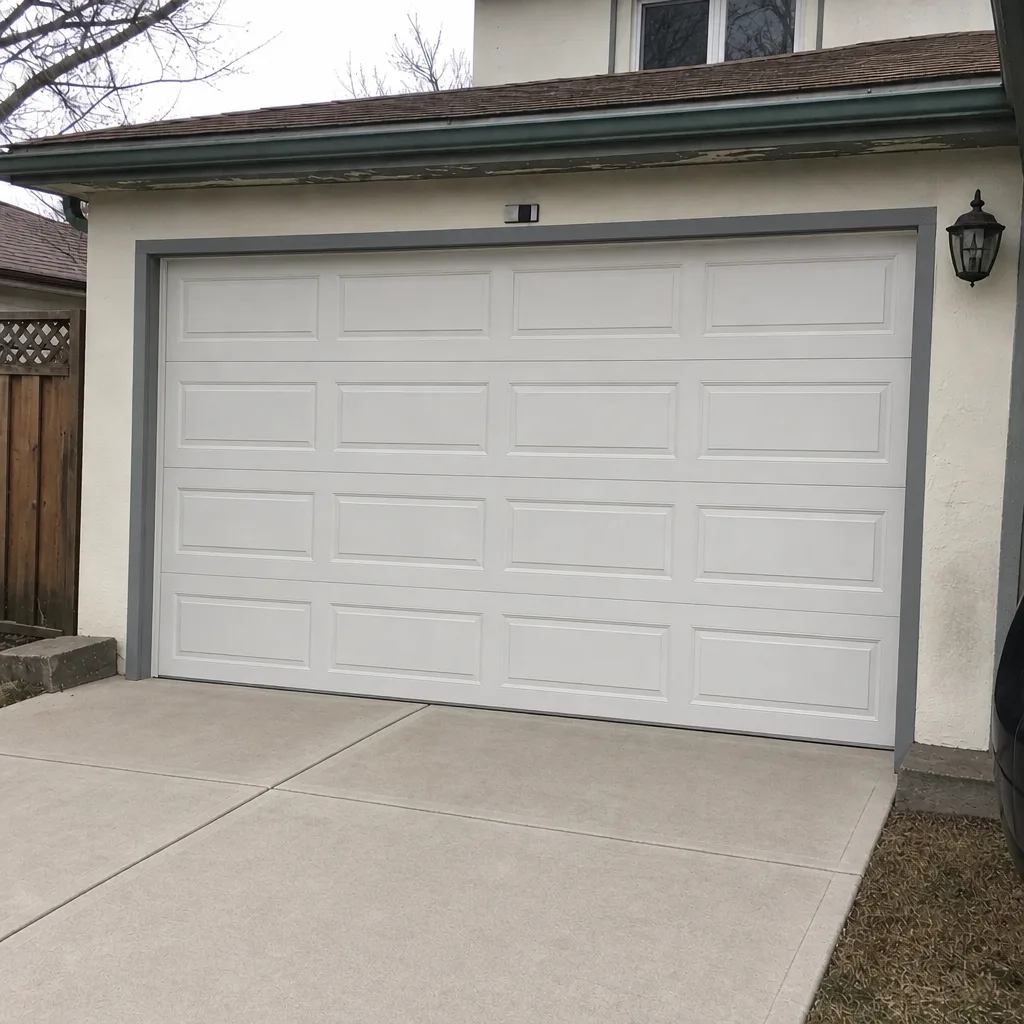 After
Frequently Asked Questions
Close the door fully if it isn’t already, pull the manual release cord hanging from the trolley, then lift the door by hand from the bottom center. Once the car is out, prop the door open or hold it and lower it slowly. Never pull the release while the door is partway up. If you’re not sure which cord is the release, call (888) 912-7130 – we’ll walk you through it. Estimates are free.
Yes, you can open it by hand, but it’s heavy and technique matters: disconnect the opener, get help, lift from the bottom center, and prop or hold the door while the car comes out. Do not run the opener with a broken spring, and never try to repair the spring yourself. Call (888) 912-7130 for spring repair – the price is quoted before any work starts.
Press the wall button once, and if the door won’t finish its cycle, pull the release cord and let the door settle. Keep clear of the opening and slide the car out carefully. Do not force the door up by hand – you’ll bend a panel or pop a roller. Call us for a same-day visit if the door won’t move after the release. Estimates are free.
Spring repair is priced per job by a written estimate, and the estimate is free. A broken torsion or extension spring on a door in Park Hill is one of the most common calls we get, and it’s a same-day repair in most cases. Call (888) 912-7130 for an exact quote on your door.
No. The written estimate is the price. We quote before any work starts, and the number on the estimate is what you pay. If we find something different once we’re there, we discuss it with you before doing anything else. Call (888) 912-7130 – estimates are free.
Often, yes. Fast dispatch runs from 7am to 7pm, Sunday through Friday, and we answer the phone 24/7. If you’re calling outside dispatch hours, we book you into the next opening. Call (888) 912-7130 and we’ll tell you the soonest we can be there. Estimates are free.
The Bottom Line
A garage door emergency is only a crisis when nobody in the house knows the routine. The four things that matter: know where the manual release is and label it, never pull it with the door partway up, never run the opener with a broken spring, and never force a stuck door. Add a flashlight, a step stool and one other adult in the household who knows the sequence, and you’ve handled the worst of it. The spring itself is the one part that always belongs to a trained technician. Our technicians have up to 9 years of experience, and we handle spring repair, openers and installation across Park Hill, so a single call covers the whole system. Call (888) 912-7130 for a free estimate. We answer 24/7. Fast dispatch from 7am to 7pm, Sunday through Friday.
Written by the team at Garage Door Repair Park Hill.